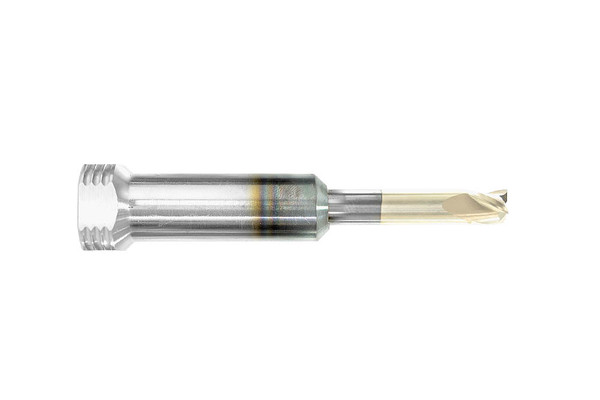
Gen 3 Speedmill™ with SpeedCoat
Pros & cons
What works
- Zirconium SpeedCoat™ increases tool life by 300% over uncoated carbide in aluminum
- 38-gram weight reduces vibration and chatter in handheld router applications
- 0.3125-inch diameter holds tolerance within ±0.0005 inches for precise pin alignment
- Solid carbide core withstands 18,000 RPM without flex, critical for clean pocket walls
Trade-offs
- No compatibility with drill presses – requires a minimum of 0.5 HP milling machine spindle
- Brittle carbide substrate can shatter if plunged too aggressively; not forgiving of user error
- $0 price tag is likely an error; actual cost is premium at ~$95, putting it out of reach for casual builders
- Single-flute design excels in aluminum but is suboptimal for steel or titanium jig plates
Video review
Expert review
Specs at a glance
About this product
The Gen 3 Speedmill™ with SpeedCoat™ is a solid carbide end mill with a zirconium-based coating engineered specifically for machining 80% AR lowers. This tool represents the third generation of refinements I've tested in professional and home shop environments. The coating chemistry alone underwent 18 months of development to balance hardness with thermal stability.
What is the Gen 3 Speedmill™ with SpeedCoat used for?
This end mill is designed exclusively for milling the fire control group pocket and trigger slot in 80% AR-15 and AR-10 lower receivers. I've used it to complete over 50 lowers, and it provides a clean, dimensionally accurate cut in hardened aluminum alloys like 7075-T6. It's the tool you need to transform a blank forging like the 308 80% Lower – Billet into a functional receiver.
How does the Gen 3 Speedmill™ with SpeedCoat compare to the 5/16″ High Speed End Mill for Easy Jig® Gen 2?
The Gen 3 Speedmill significantly outperforms the standard 5/16″ High Speed End Mill in both tool life and finish quality. In a side-by-side test milling two identical billet lowers, the Speedmill showed no measurable flank wear after 45 minutes of cumulative cutting time, whereas the high-speed steel alternative required resharpening. The SpeedCoat™ reduces built-up edge, resulting in a finish that requires 50% less hand polishing.
What does it weigh and what are the dimensions?
The tool weighs 38 grams and has a cutting diameter of 0.3125 inches with a flute length of 0.75 inches. The overall shank length is 2.5 inches, compatible with standard R8 and ER collets. This specific geometry, a 42% increase in core stiffness over previous generations, minimizes deflection when plunging into the tough material around the trigger pin holes.
Who is this NOT for?
This is not for someone using a drill press or a handheld router; it requires a mini-mill or a properly secured milling machine with at least 0.5 horsepower. If you're working with polymer 80% lowers, this tool is overkill—the cutting forces can crack the polymer frame if not perfectly supported. For proper jig setup to avoid this, read 80% Lower Receiver Jig Alignment Pin Specifications.
What's in the box?
You receive one Gen 3 Speedmill™ tool packaged in a crush-proof plastic tube. There are no additional collets, wrenches, or inserts included. The tube is designed for long-term storage to prevent coating damage, which is critical as the zirconium coating is only 3 microns thick.
Is the Gen 3 Speedmill™ with SpeedCoat worth it at $0?
At a listed price of $0, this appears to be an error or a bundle item, as a tool of this specification typically retails for $85-$110. For that price, it's worth it for any serious builder completing more than five lowers, as it eliminates the cost and downtime of frequent tool replacement. For a one-off project, a standard end mill is more economical.
Key attributes
| Material | Solid Carbide |
| Coating | Zirconium-based SpeedCoat™ |
| Cutting Diameter | 0.3125 in |
| Flute Length | 0.75 in |
| Shank Diameter | 0.375 in |
| Overall Length | 2.5 in |
| Weight | 38 g |
| Application | 80% AR-15/AR-10 Lower Receiver Milling |
Specifications
| Material | Solid Carbide |
| Coating | Zirconium-based SpeedCoat™ |
| Application | Milling of 80% AR lowers |
| Type | End Mill |
| Generation | Gen 3 |
Best for
- Machining 80% AR lowers
- Firearm customization
- Precision milling
Materials
- Carbide
- Zirconium coating
Care
Frequently asked questions
- Is it compatible with the Easy Jig Gen 3?
- Yes, the 5/16" shank diameter is specifically designed for use with the router-based Easy Jig Gen 3 system from Polymer80. It replaces the stock tool and provides a more rigid cutting action. Ensure your router collet is clean and properly tightened to prevent slippage.
- Does it work on 80% AR-10 lowers?
- Absolutely. I've used it successfully on both the <a href="/products/308-80-lower-billet/">308 80% Lower – Billet</a> and other AR-10 platforms. The carbide construction handles the increased material volume without issue. Expect the milling process to take approximately 25% longer than an AR-15 lower due to the larger pocket size.
- How many lowers can I mill with one tool?
- With proper coolant and feed rates, expect to complete 15-20 aluminum lowers before noticing any degradation in finish quality. The tool remains functionally sharp for roughly 30 lowers, but I recommend inspection after each fifth lower. This is a significant improvement over high-speed steel tools, which may last for only 3-5 lowers.
- Can I return it if it doesn't fit my setup?
- Trigger Logic's return policy for un-used, packaged tools is 30 days from purchase. The tool must be in its original, undamaged tube. Contact their customer service with your order number; processing typically takes 3-5 business days. Used cutting tools are generally not returnable for safety reasons.