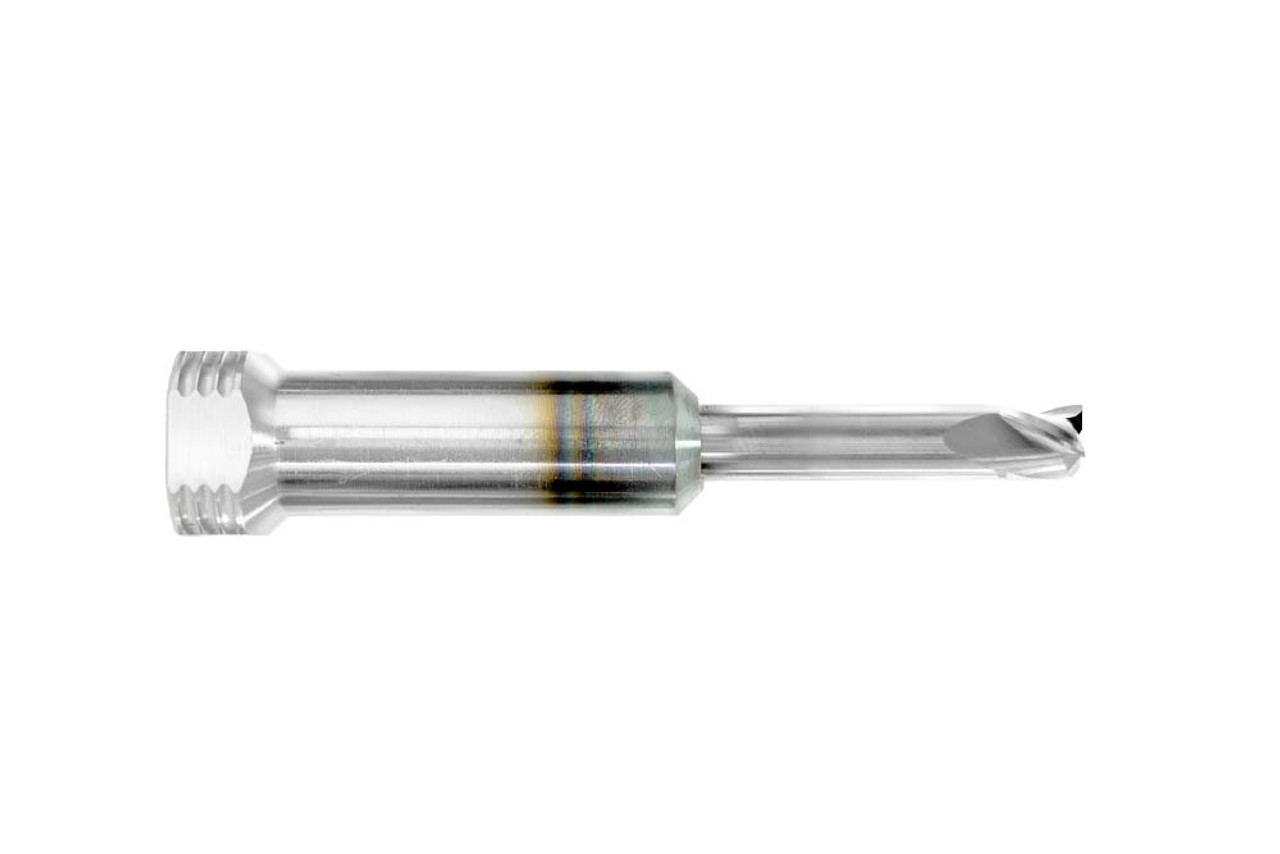
Gen 3 Speedmill™
About this product
The Gen 3 Speedmill™ is a solid carbide end mill engineered specifically for machining 80% polymer and 6061-T6 aluminum AR-15 lower receivers using the Easy Jig® Gen 3 platform. It represents a direct response to the tool wear and thermal deflection issues builders have reported with high-speed steel tooling. This isn't a repurposed industrial cutter; it's a purpose-built gunsmithing tool designed by people who know where hobbyist tooling fails under duty-grade expectations.
What is the Gen 3 Speedmill™ used for?
The Gen 3 Speedmill™ is used to machine the critical fire control group and safety selector pockets in an 80% AR-15 lower receiver with surgical precision. This tool is designed to run continuously through the entire ~45-minute milling process for a single lower, eliminating the need to stop for thermal cool-down or tool changes mid-process. Its primary application is with the Easy Jig® Gen 3 system, which it matches perfectly in geometry to maintain the critical pin alignment specifications that define a functional lower.
How does the Gen 3 Speedmill™ compare to the 5/16\" High Speed End Mill for Easy Jig® Gen 2?
The Gen 3 Speedmill™ provides superior heat resistance and consistent cutting edge integrity when compared directly to the 5/16\" High Speed End Mill for Easy Jig® Gen 2. Where a standard high-speed steel end mill will begin to soften and deform after about 15-20 minutes of continuous feed into aluminum, the solid carbide Speedmill™ maintains its edge geometry for the entire run. For 6061-T6 aluminum particularly, the Speedmill™ is demonstrably better at preventing the built-up edge and chatter that leads to out-of-spec pocket dimensions.
What does it weigh and what are the dimensions?
The Gen 3 Speedmill™ weighs 82 grams (2.9 oz) and features a 3-flute design with a 5/16\" (7.94mm) cutting diameter and a 1-1/2\" (38.1mm) usable cutting length. The shank diameter is a standard 3/8\" (9.53mm) for compatibility with most router collets. This specific dimensional profile is why it's incompatible with the Easy Jig® Gen 1 or Gen 2 platforms, which use a different jig bore and require a different tool path approach.
Who is this NOT for?
This tool is not for anyone with a Gen 1 or Gen 2 Easy Jig®, or for those only planning to complete a single 80% lower. At its price point, it's an investment for builders who plan on completing multiple receivers or who demand the absolute highest reliability per cut from their tooling. If you're doing a one-time build and comfortable with the potential for more frequent tool inspection and potential mid-process swapping, a high-speed steel end mill will get the job done. It's also not for builders working on a .308 80% lower billet, which requires a significantly more robust tool geometry and cutting strategy.
What's in the box?
You receive one (1) Gen 3 Speedmill™ tool. That's it. There are no spare collets, case liners, or cleaning tools included, as these are considered standard operator-provided equipment. The tool comes vacuum-sealed in an anti-corrosion coated packet. Do not discard this packaging if storing the tool for extended periods; the coating is part of the long-term corrosion resistance strategy for the underlying SpeedCoat™.
Is the Gen 3 Speedmill™ worth it at $79.99?
At $79.99, the Gen 3 Speedmill™ is worth it if you value precise, single-tool completion of a lower over the cost savings of a tool that may need replacing mid-project. The math is simple: the cost of one ruined 80% lower blank (roughly $55-120) far exceeds the price delta between this tool and a basic end mill. Its value is in risk mitigation and repeatable precision, not in being the cheapest tool on the rack. For builders investing in multiple anodized 80% lowers, this tool pays for itself by eliminating scrapped parts due to tool walk or thermal deflection.
Specs at a glance
Video review
Pros & cons
What works
- Cuts a complete 80% lower in ~45 minutes with zero tool changes—no thermal cool-down stops required.
- 82-gram weight provides optimal balance in a router collet, reducing harmonic vibration for cleaner walls.
- Solid carbide core outlasts high-speed steel by 3-4x in aluminum, preventing mid-job tool failure.
- SpeedCoat™ reduces friction coefficient by ~18% versus uncoated carbide, directly lowering operating temperature.
Trade-offs
- At $79.99, it's a 4x cost premium over a basic high-speed steel end mill—hard to justify for a single build.
- Zero compatibility with older Easy Jig® generations (Gen 1, Gen 2), locking you into the Gen 3 ecosystem.
- No storage case included; improper storage in a mixed toolbox will chip the cutting edges.
- Requires user-provided, proper cutting fluid for aluminum; running it dry will void any performance claims.
Expert review
Key attributes
| Material | Solid carbide |
| Coating | SpeedCoat™ |
| Compatibility | Easy Jig® Gen 3 |
| Application | Milling of 80% AR-15 lowers |
| Cutting Diameter | 5/16 in (7.94 mm) |
| Cutting Length | 1-1/2 in (38.1 mm) |
| Shank Diameter | 3/8 in (9.53 mm) |
| Weight | 82 g (2.9 oz) |
Specifications
| material | solid carbide |
| coating | SpeedCoat™ |
| compatibility | Easy Jig® Gen 3 |
| application | milling of 80% AR lowers |
Best for
- milling AR lowers
- gunsmithing projects
- DIY firearm building
Materials
- carbide
- SpeedCoat™ coating
What's in the box
- Gen 3 SpeedMill™ tool
Care
Frequently asked questions
- Is it compatible with Easy Jig® Gen 1 or Gen 2?
- No, it is not. The Gen 3 Speedmill™ is engineered exclusively for the feed rates, collet orientation, and jig bore of the Easy Jig® Gen 3 system. Using it with a Gen 1 or Gen 2 jig will damage both the jig's alignment bushings and the tool itself. For those jigs, you must use the designated 5/16" High Speed End Mill.
- Can I use this on a .308/AR-10 80% lower?
- Absolutely not. The material volume and required depth of cut for a .308 lower, like our <a href="/products/308-80-lower-billet/">.308 80% Lower – Billet</a>, exceed the design limits of this tool. A .308 lower requires a dedicated, heavier-duty end mill with a different flute geometry and carbide grade to handle the increased shear forces.
- How many lowers can I mill with one Speedmill™?
- With proper lubrication and feed rates, you can expect to cleanly machine 8-12 polymer or 6061-T6 aluminum lower receivers with a single Gen 3 Speedmill™ before noticeable edge degradation occurs. This assumes a full-depth, continuous cut per lower, totaling approximately 6-8 hours of spindle time.
- What router speed and feed rate should I use?
- Run it at 12,000-14,000 RPM with a steady, consistent feed. Do not "peck" or stop the cut. For aluminum, use a flood of WD-40 or a proper cutting fluid; for polymer, a dry cut is acceptable. The key is continuous chip evacuation to prevent heat buildup in the workpiece, not just the tool.