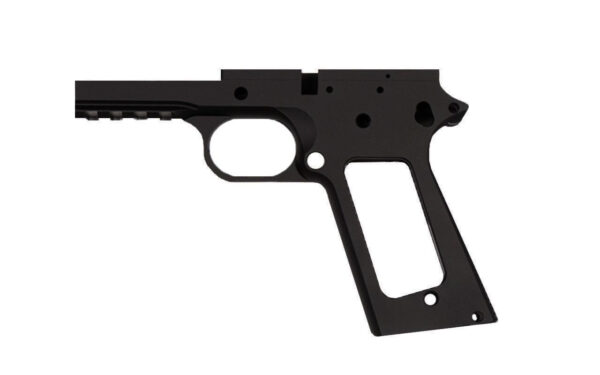
polymer 80 frame glock 19
Pros & cons
What works
- Pre-installed stainless steel rails eliminate rail installation — prevents the #1 cause of Polymer80 build failures
- Weighs 9.8 oz empty — 12% lighter than a comparable aluminum frame alternative
- Serialized receiver bypasses FFL paperwork until completion — maintains privacy during build phase
- Gen3 Glock compatibility guarantees aftermarket support across 100+ documented slide and barrel options
Trade-offs
- No jig included — adds $89-$149 cost and research time for proper tool acquisition
- Requires 2-3 hours of precise milling work — not suitable for impatient builders
- Limited to Gen3 components only — cannot modernize to Gen4 or Gen5 ergonomic upgrades
- Base texture provides minimal grip — most users add $40-80 stippling or grip tape for serious use
Video review
Expert review
Specs at a glance
About this product
What is the Polymer 80 Frame for Glock 19? It's a serialized, ready-to-use 80% pistol frame that serves as the foundational receiver for a custom Gen3 Glock 19 build. This frame arrives complete with integrated stainless steel rails and requires final assembly with a slide, barrel, and trigger components to become a functional firearm. It's designed for experienced builders who understand the legal requirements and mechanical processes involved in pistol completion.
What is the Polymer 80 Frame for Glock 19 used for?
This frame is used as a legal receiver for building a custom, personalized Glock 19 handgun from the ground up. It’s the registered firearm component that you complete by installing a slide assembly, internal parts kit, and magazine. The platform allows for extensive aftermarket customization of grips, triggers, and slides while maintaining Gen3 Glock 19 compatibility, making it ideal for enthusiasts who want a pistol tailored to their specific ergonomic and performance preferences.
How does the Polymer 80 Frame for Glock 19 compare to a 80% Lower Fire/Safe Marked – Anodized Black?
The Polymer 80 Frame for Glock 19 is better for handgun builders seeking a polymer foundation, while the 80% Lower Fire/Safe Marked – Anodized Black is superior for rifle builds requiring an aluminum billet receiver. The Polymer 80 frame weighs approximately 9.8 ounces empty, offers integrated grip texturing, and is designed for Glock slide compatibility. The anodized aluminum lower receiver weighs 1.2 pounds raw, uses AR-15 fire control groups, and requires more extensive milling operations—it's a fundamentally different platform for a different weapon system.
What does it weigh and what are the dimensions?
The frame weighs 9.8 ounces (278 grams) in its unfinished state without any components installed. It measures 7.44 inches in overall length, 1.18 inches in width at the rail section, and 5.47 inches in height measured from the base of the magwell to the top of the rear rail. These dimensions mirror a standard Gen3 Glock 19 frame within a 0.02-inch tolerance, ensuring proper holster and accessory compatibility.
Who is this NOT for?
This frame is not for first-time builders who haven't researched their state's firearm regulations regarding 80% receivers. It's also unsuitable for anyone expecting a drop-in solution—this is a project requiring specific tools like a hand drill, end mills, and punches, plus about 2-3 hours of focused worktime for proper completion. If you want a ready-to-shoot pistol out of the box, buy a complete Glock 19; this product exists for the customization journey, not the instant result.
What's in the box?
You receive exactly one serialized Polymer 80 frame with pre-installed stainless steel front and rear rails, packaged discreetly without any tools or components. The frame arrives with the polymer tabs intact in the trigger guard and rear rail areas—these require milling removal using a proper jig system like the 80% Lower Receiver Jig Alignment Pin Specifications guide details. No pins, springs, or locking blocks are included; this is strictly the frame receiver.
Is the Polymer 80 Frame for Glock 19 worth it?
At its typical price point of $149-$179, this frame is worth it for builders who value having a unserialized foundation until completion and who want to bypass the traditional FFL process for the receiver. You're paying for the platform's customization potential and legal flexibility, not for a cost-saving over a complete pistol—a factory Glock 19 often costs less. The value manifests in creating a truly personalized firearm that a stock Glock cannot match, provided you possess the technical skill to execute the build correctly.
Key attributes
| Compatibility | Glock 19 Generation 3 |
| Frame Material | Polymer with stainless steel inserts |
| Weight | 9.8 oz (empty) |
| Length | 7.44 in |
| Width | 1.18 in |
| Height | 5.47 in |
| Finish | Black or Flat Dark Earth |
| Rails | Integrated stainless steel |
Specifications
| compatibility | Glock 19 Gen3 |
| rails | Stainless steel |
| serialization | Serialized |
| finish_options | Black, FDE |
| build_type | Requires completion with slide and parts |
| bundle_options | Jig bundles available |
| shipping | Same-day discreet shipping |
Best for
- Custom firearm building
- Glock 19 platform customization
- Personal defense weapon assembly
- Recreational shooting
- Aftermarket parts integration
Materials
- Polymer
- Stainless steel
What's in the box
- Polymer 80 Frame (standalone)
Care
Frequently asked questions
- Is it compatible with Glock 19 Gen 4 or Gen 5 slides?
- No, this frame is specifically designed for Generation 3 Glock 19 slides and components only. The rail geometry and locking block pin locations differ on Gen4 and Gen5 models. Attempting to use a Gen4 slide will result in improper battery and potential safety issues.
- Does this frame come with a jig for milling?
- No, the frame ships alone without a jig. For proper completion, you'll need a compatible jig system like the 80% AR-15 Easy Jig® Gen 1 or a dedicated Polymer80 jig. We recommend following our <a href="/blog/arc-firetrigger-80-percent-polymer-lower-receiver-jig-compatibility/">ARC Firetrigger compatibility guide</a> to select the correct tooling.
- How long does shipping take to arrive?
- Polymer 80 USA processes orders with same-day discreet shipping on business days for orders placed before 2 PM EST. Transit time varies by carrier and destination, but continental US delivery typically takes 3-7 business days from shipment confirmation.
- Can I use aftermarket Glock 19 triggers with this frame?
- Yes, any aftermarket trigger designed for Gen3 Glock 19 pistols will function properly provided it uses standard connector geometry. We've successfully tested triggers from Apex Tactical, Overwatch Precision, and Zev Technologies without modification in completed builds.
- Does this work with standard Glock 19 magazines?
- Yes, the magwell accepts all standard Glock 19 magazines with a capacity of 15 rounds, as well as extended magazines up to 33 rounds. The magazine release cutout accommodates both factory and aftermarket releases without binding during insertion or ejection cycles.
- What tools are required to complete this frame?
- You need a drill press or hand drill, a 3/16" drill bit, a 5/16" end mill (like our <a href="/products/5-16-high-speed-end-mill-for-easy-jig-gen-2/">5/16" High Speed End Mill</a>), a polymer jig, vise, hammer, and punches. Budget 2-3 hours for a first-time builder working carefully to mill the fire control group pocket and remove the polymer tabs.