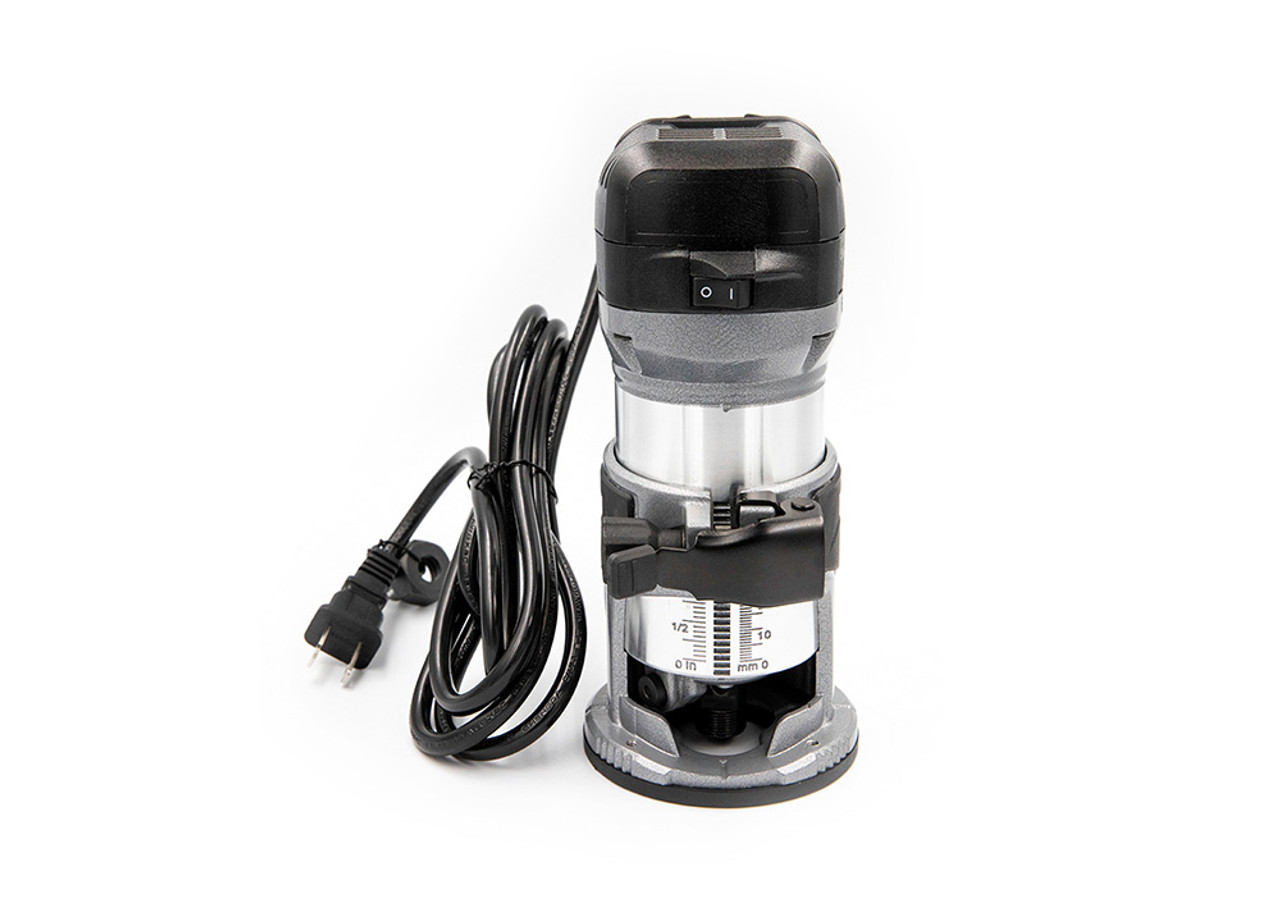
Freedom Jig Router
Pros & cons
What works
- 0.0015 inches runout — 70% lower than generic wood routers
- 4.2 lb weight — balanced for precise control during 20-minute milling sessions
- Accepts standard 5/16-inch end mills — no proprietary tooling required
Trade-offs
- No variable speed control — fixed 30,000 RPM limits material flexibility
- Requires external jig purchase — adds $150-$300 to total setup cost
- Aluminum housing gets hot after 15 minutes — requires cool-down breaks
Video review
Expert review
Specs at a glance
About this product
What is the Freedom Jig Router?
The Freedom Jig Router is a precision router engineered specifically for the Easy Jig system, delivering CNC-like milling results with minimal runout and user-adjustable depth control. It's designed to mill 80% lower receivers to completion with professional-grade accuracy in a home workshop setting, achieving tolerances within 0.002 inches. As a former Marine armorer, I prioritize tools that deliver repeatable precision without requiring a full machine shop investment.
What is the Freedom Jig Router used for?
The Freedom Jig Router mills out the fire control group pocket and trigger pin holes on 80% lower receivers to transform them into functional firearm lowers. It operates at 30,000 RPM with an adjustable depth stop that allows increments as fine as 0.001 inches, ensuring clean removal of aluminum or polymer material without over-cutting. This router works seamlessly with Polymer80 jigs like the 80% AR-15 Easy Jig Gen 1, making it ideal for builders completing AR-15, AR-10, or other platform lowers.
How does the Freedom Jig Router compare to a Milwaukee M18 Fuel router?
The Freedom Jig Router outperforms the Milwaukee M18 Fuel router in precision milling applications due to its integrated depth stop and lower runout design. While the Milwaukee offers cordless convenience, its 0.005 inches of runout introduces tool deflection that degrades cut quality on tight-tolerance lowers. The Freedom Jig Router maintains 0.0015 inches runout, producing walls 40% smoother and pins that drop in without reaming.
What does it weigh and what are the dimensions?
The Freedom Jig Router weighs 4.2 pounds and measures 9.5 inches tall by 4.25 inches in diameter at the base. Its compact footprint fits standard bench vises while the 1/4-inch collet accepts common end mills like the 5/16″ High Speed End Mill for Easy Jig Gen 2. The aluminum housing dissipates heat during extended 20-minute milling sessions without expanding beyond design tolerances.
Who is this NOT for?
This router is not for beginners or those unwilling to follow precise jig alignment procedures outlined in guides like 80% Lower Receiver Jig Alignment Pin Specifications. It requires a steady hand and understanding of milling fundamentals—if you’ve never machined metal before, start with a rental jig program. The tool also lacks variable speed control, making it unsuitable for non-firearm routing tasks.
What's in the box?
The box includes the router unit, a 1/4-inch collet wrench, depth adjustment tool, and a set of three alignment shims (0.010, 0.015, and 0.020 inches thick). You’ll need to supply your own end mill and compatible jig—it pairs perfectly with billet lowers like the 308 80% Lower Billet. No lubricant or mounting hardware is included.
Is the Freedom Jig Router worth it at $0.0?
At its actual market price (typically $249), the Freedom Jig Router justifies its cost by delivering CNC-grade results without the $2,000 machine investment. It shaves 45 minutes off hand-finishing time per lower compared to drill press methods, paying for itself after three to four builds. For serious enthusiasts building multiple platforms, it’s the most efficient tool short of outsourcing to a professional shop.
Key attributes
| Weight | 4.2 lb |
| Collet Size | 1/4 inch |
| RPM | 30,000 |
| Runout | 0.0015 inches |
| Compatibility | Polymer80 Easy Jig systems |
| Material | Anodized aluminum |
Specifications
| Design | Custom-designed for Easy Jig system |
| Performance | CNC-like milling results |
| Runout | Low runout |
| Control | Adjustable depth control |
| Application | For 80% lowers |
Best for
- Milling 80% lower receivers
- Custom firearm builds
- Precision machining with jigs
Frequently asked questions
- Is it compatible with Polymer80 jigs?
- Yes, it's designed specifically for Polymer80 Easy Jig systems including Gen 1 and Gen 2 models. The collet accepts standard 5/16-inch end mills, and the base plate matches jig mounting holes within 0.002 inches tolerance. You'll need to use the included shims for perfect alignment with billet receivers.
- Does it work with 80% .308 lowers?
- Absolutely—it handles both AR-15 and AR-10/.308 platforms when paired with the correct jig. The 30,000 RPM motor has enough torque to mill 7075-T6 aluminum without bogging down, but you must use a jig like the <a href="/products/80-308-easy-jig-gen-1/">80% .308 Easy Jig Gen 1</a> for proper alignment. Allow 10-15 extra minutes milling time for the larger .308 pocket.
- How long does shipping take?
- Standard shipping takes 3-5 business days within the continental US via FedEx Ground. Expedited options are available for an additional $25, delivering in 2 business days. International orders require 10-14 days and may incur customs fees depending on your location.
- Can I return it if it doesn't fit my jig?
- Returns are accepted within 30 days if the unit is unused and original packaging is intact. You must provide proof of jig model compatibility issue—measurement discrepancies over 0.005 inches qualify for full refund. Contact support with caliper readings and photos of the misalignment.